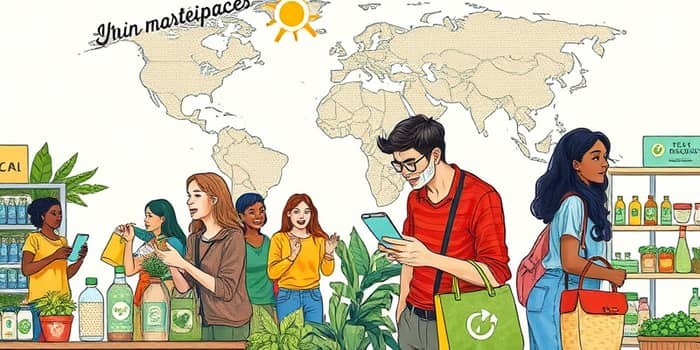
Every time you swipe, tap, or click, you cast a vote for the kind of world you want to live in. Consumer choices are not just transactions; they are catalysts for meaningful social, economic, and environmental transformation.
From record-breaking spending figures to targeted boycotts, individuals wield unprecedented influence by directing dollars to businesses that reflect their values.
U.S. consumer spending surged to an astonishing $16.4 trillion in Q2 2025, a new high-water mark that underscores the enormous purchasing power at our fingertips. Globally, Generation X alone is expected to drive $15.2 trillion in spending in 2025, ranking them as one of the world’s largest “markets.” Even modest shifts in where consumers allocate funds can trigger seismic shifts in corporate strategy.
Despite a mild deceleration—projected growth of 3.7% by the U.S. Bureau of Economic Analysis and 2.3% per J.P. Morgan—consumer resilience remains robust. Inflation continues to rise, with the Consumer Price Index climbing 2.9% over the past year, yet priorities are evolving as buyers seek out value beyond price alone.
Spending patterns vary dramatically by age cohort, creating a mosaic of influence:
Gen Z’s cautious approach—Gen Z cuts spending by thirteen percent—reflects both economic anxiety and a deliberate reallocation toward brands that demonstrate genuine commitment to ethics and sustainability.
In an age of instantaneous communication, companies monitor social media, ratings, and reviews like lifelines. When consumers channel money toward ethical, sustainable, and transparency-driven brands, those businesses flourish and set industry standards.
Movements like ESG (environmental, social, governance) investing, and digital campaigns—from #Boycott initiatives to viral “buycott” challenges—exert pressure on corporations to adopt or enhance policies around worker rights, diversity, and environmental stewardship. A single viral post can lead to boardroom discussions and policy shifts.
Different product categories reveal the nuanced ways consumers apply their power. Apparel and electronics saw spending cuts led by Gen Z, with demand for transparency and value influencing purchase decisions. Meanwhile, housing and services continue to grow, with a $77.2 billion increase in services spending in Q2 2025 as more buyers prioritize experiences over physical goods.
Retail sales overall have shown signs of slowing—just 0.1% growth in April—but this doesn’t dampen the overall trend: conscientious consumers are redirecting spend rather than reducing total outlay.
Not every consumer’s wallet carries equal weight. Structural challenges and emerging opportunities shape the landscape of spending influence.
Every purchase is a chance to reinforce the businesses you want to see thrive. You can:
Emerging technologies like AI-driven recommendation engines and blockchain-based supply chain tracking promise even greater transparency. Consumers will soon have access to immutable data on labor conditions, carbon footprints, and ethical certifications—right at the point of sale.
As digital wallets and mobile payments proliferate, every transaction is a data point potential for positive disruption. Imagine a world where your weekly grocery run automatically allocates bonus rewards for eco-friendly products, or where transparent scoring algorithms guide your electronics purchases toward fair-labor-certified manufacturers.
Every choice you make today lays the groundwork for a more equitable, sustainable tomorrow. When consumers act in concert—leveraging the combined might of trillions of dollars in spending—they become architects of a new economic order.
Seize that power. Let your wallet reflect not only what you need, but who you want to be and the world you want to build.
References