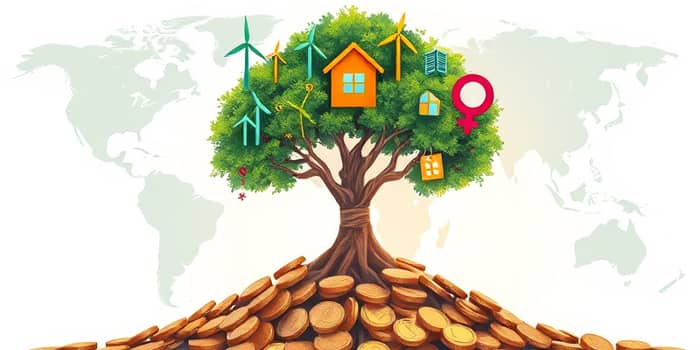
Building a portfolio that aligns with your values and drives measurable change requires thoughtful planning, rigorous analysis, and clear objectives. In this guide, we’ll walk through concepts, strategies, and practical steps to help you construct a portfolio that delivers both financial returns and tangible social or environmental benefits.
Whether you’re an individual investor or an institution, adopting sustainable and impact investing approaches can transform capital into a powerful tool for progress. Read on to discover how to get started, measure success, and overcome common challenges.
Creating a Sustainable Portfolio demands more than just screening out controversial industries—it means intentionally directing capital toward companies and projects that generate measurable, positive social and environmental outcomes without sacrificing financial performance.
Use this guide as a roadmap to articulate your objectives, select the right asset classes, and monitor your impact over time.
Sustainable Investing (SI) integrates environmental, social, and governance factors into financial analysis, supporting companies that demonstrate responsible practices. Impact investing goes a step further with an explicit goal: generating measurable social and environmental benefits alongside market returns.
While sustainable investing often focuses on avoiding harm—such as divesting from fossil fuels—impact investors seek to fund initiatives like renewable energy, affordable housing, or gender equity programs, tracking outcomes like carbon emissions avoided or number of communities served.
Investing through a sustainable and impact lens offers several compelling advantages:
To ensure your portfolio truly generates impact, adhere to these four key principles:
Impact investments span a range of asset classes, each offering unique pathways to influence.
Each asset class gives you different levers to influence environmental or social outcomes, from voting on corporate policies to directly funding community development.
Follow these actionable steps to build a well-structured, impact-driven portfolio:
Once your allocations are set, maintain flexibility to adjust as new opportunities arise or as measurement insights point to refinements.
Robust impact measurement is non-negotiable. Use quantitative metrics like “tons of CO2 avoided,” “number of beneficiaries served,” or “percentage of renewable energy produced” to ensure transparency and accountability.
Adopt established reporting standards—such as GRI, SASB, or the IRIS+ catalog—and schedule regular performance reviews. This ongoing monitoring not only demonstrates progress to stakeholders but also informs strategic rebalancing to optimize both impact and financial returns.
While the sustainable investing landscape has grown rapidly—reaching over $1.16 trillion globally in 2022—investors must remain vigilant:
Greenwashing and impact washing pose significant risks, as some products overstate benefits without rigorous verification. Mitigate this by insisting on third-party certifications and transparent methodologies.
Data gaps and inconsistencies can hamper measurement efforts. Collaborate with managers who invest in reliable data collection and reporting technologies, and advocate for evolving industry standards.
Looking to the future, we anticipate:
By staying informed, maintaining rigorous standards, and embracing innovation, you can position your portfolio to drive meaningful change—and secure competitive returns—over the long term.
In a world facing unprecedented environmental and social challenges, your investment choices matter. Creating a sustainable portfolio is more than a trend—it’s a pathway to align capital with purpose, empowering you to leave a lasting legacy of progress.
References