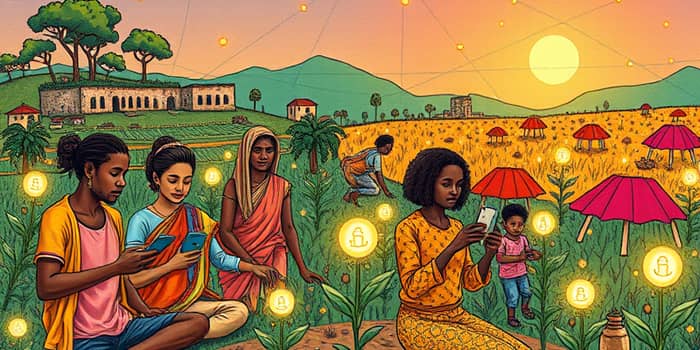
Financial inclusion has emerged as a transformative force in global development, ensuring that individuals and businesses gain affordable, responsible financial services—savings, credit, payments, and insurance—that meet their needs in a sustainable way. Beyond account numbers, the focus has shifted to the tangible improvements in people’s lives that arise when communities access the right tools at the right time.
Today, more than three quarters of adults in low- and middle-income countries can access formal financial accounts, yet significant gaps remain. To build lasting economic empowerment, we must illuminate both the strides taken and the hurdles ahead.
At its core, financial inclusion means ensuring that every person, regardless of background, has the opportunity to use financial services responsibly. It is not an end in itself but a gateway to broader aims: economic opportunity, resilience against shocks, gender equality, healthcare access, and climate adaptation.
Policymakers and practitioners increasingly talk about financial health and well-being—seeking outcomes such as stable savings, reliable credit history, and the confidence to manage day-to-day finances. This active, regular use is essential to move from mere access to genuine empowerment.
According to the latest World Bank Global Findex data, 79% of adults worldwide now hold a formal financial account, up from just 62% in 2014. In low- and middle-income countries (LMICs), account ownership has climbed to 75%, an impressive 80% increase since 2011.
Yet 1.6 billion adults remain unbanked or inactive, often the hardest-to-reach rural and marginalized populations. Formal savings in LMICs surged to 40% in 2025, up from 25% in 2021, largely driven by digital and mobile finance innovations.
Progress on the gender gap in account ownership has been notable: it fell to 5% from 9% a decade ago, thanks to targeted efforts in rural areas. Meanwhile, 62% of adults now make or receive digital payments, and 42% of those are for purchasing goods, online or in stores.
Each pillar plays a vital role: robust ID systems reduce fraud, digital payments lower transaction costs, literacy programs empower informed decisions, and supportive regulations foster innovation.
MSMEs account for over 50% of employment in many LMICs but still face credit access hurdles. Financial inclusion unlocks capital, encouraging innovation and livelihoods diversification.
Regulatory inconsistencies and infrastructure gaps further impede progress. Wealth, gender, and rural/urban divides continue to shape unequal outcomes.
The sector is witnessing a shift from access to impact: measuring real-world outcomes such as resilience and sustainable livelihoods. Fintech innovations—from digital wallets to peer-to-peer lending platforms—are reshaping how underserved groups interact with finance.
Buy Now Pay Later (BNPL) surpassed $350 billion in 2024, offering flexible credit to consumers and micro-entrepreneurs. Evidence suggests that evidence-based policymaking and innovation can expand financial health when integrated with robust consumer safeguards.
To accelerate economic empowerment, stakeholders should:
Such measures, aligned with the UN Sustainable Development Goals, will drive inclusive growth and mitigate systemic inequalities.
In Sub-Saharan Africa, mobile money platforms like M-Pesa have empowered millions to save, borrow, and transact remotely, driving fintech funding to micro and small enterprises from 13% to 88% of total investments between 2020 and 2023.
Meanwhile, in South Asia and Southeast Asia, targeted women’s inclusion programs have closed the gender gap entirely in some countries, demonstrating how tailored interventions can yield rapid, equitable progress.
As we look to the future, financial inclusion must integrate with broader development agendas—climate adaptation, health systems, and social protection. This requires a holistic approach that recognizes finance as a catalyst, not a siloed sector.
By maintaining focus on integration with broader development goals and leveraging digital innovation responsibly, policymakers, financial institutions, and communities can unlock economic empowerment at scale. Ultimately, financial inclusion is about more than numbers—it’s about forging pathways to opportunity, resilience, and dignity for every person.
References