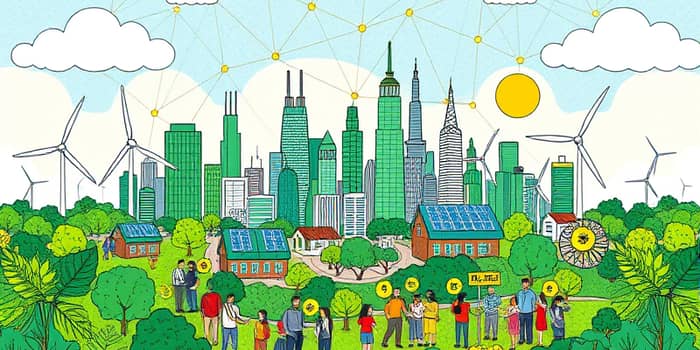
As the world navigates a complex tapestry of environmental urgency and technological progress, investors are at a pivotal crossroads.
In 2025, sustainable innovation emerges not only as a moral imperative but also as a powerful engine for growth, resilience, and long-term value creation.
Leading the charge are five transformational investment themes that promise to reshape economies and societies alike. These pillars address resource efficiency, climate resilience, and human well-being, guiding capital toward solutions that deliver measurable impact.
Investors seeking to harness transformational innovation opportunities in AI and energy must align strategies with these themes, focusing on scalable solutions that address global challenges.
The convergence of technology and nature underpins several high-growth sectors. From farm fields to data centers, innovation is reimagining traditional industries through a sustainable lens.
Regenerative agribusiness and alternative proteins are transforming the global food system, enhancing soil health while reducing emissions. Meanwhile, nature-based finance instruments tie corporate funding costs to environmental targets, creating a robust incentive structure for bio-ingredient producers.
Data centers and fiber networks are no longer back-office assets; they are rapidly compounding enterprise spending on AI and powering next-generation applications in manufacturing, healthcare, and smart cities.
Geography shapes opportunity. Two regions stand out for their combination of unmet needs, policy support, and demographic trends.
Latin America and the Caribbean boast a $2.2 trillion infrastructure gap, with 45% of adults still unbanked and MSMEs facing a $1.2 trillion financing shortfall. Digital platform adoption grew 30% in 2024, reducing transaction costs and channeling capital into local economies. Yet only 22% of SDGs are on track for 2030, underscoring the urgent need for targeted investments in renewable energy, financial inclusion, and resilient infrastructure.
Europe remains the global leader in sustainable finance, underpinned by Science Based Targets and binding climate commitments. To achieve net zero by 2050, the continent must more than triple clean energy investments to $4 trillion annually by 2030. Companies integrating climate science into business strategies are unlocking new markets and mitigating regulatory risks.
The energy landscape is undergoing a profound transformation, driven by policy developments and technological breakthroughs. Renewables now supply 35% of global power and are projected to reach 46% within the decade.
Beyond solar and wind, critical minerals like lithium have seen demand triple between 2015 and 2022, fueled by electric vehicles and grid-scale storage. Policy measures such as the OBBBA and treasury safe harbor updates provide visibility for projects through 2030, catalyzing capital flows into hard-to-abate sectors like cement, where low-emissions recycling processes are emerging.
Three catalysts reinforce this shift: reindustrialization in U.S. manufacturing, widespread electrification, and surging demand for data centers. Together, they create electricity demand approaching a significant inflection point, posing both opportunity and risk for investors focused on infrastructure resilience.
Mobilizing capital at scale requires creative structures that de-risk investments and broaden participation. Blended finance, public-private partnerships, and structured debt solutions are proving essential.
Development finance institutions have demonstrated that each dollar of concessional capital can catalyze multiple dollars of private investment. Initiatives like Chile’s Tarifas III energy project illustrate how strategic blending of funds can accelerate clean energy deployment in emerging markets.
Meanwhile, the “silver economy” is creating demand for digital credit and banking solutions, highlighting the role of inclusive finance in sustainable development.
Robust data and global cooperation are the bedrock of lasting climate action. The democratization of ESG and risk data is empowering investors to benchmark performance, adjust risk profiles, and align portfolios with science-based targets.
Forums such as COP30’s Sustainable Innovation gathering bring together innovators, financiers, and policymakers to forge partnerships that amplify impact. Emphasis on nature-based solutions, ocean health, and justice ensures a just and inclusive global climate action framework that leaves no community behind.
Translating opportunity into action demands a disciplined, impact-oriented approach. Consider these practical steps:
By embedding impact metrics into investment processes, asset managers can enhance alpha potential while contributing to global net zero and SDG targets. Collaborating with multilateral institutions and local stakeholders ensures capital deploys responsibly and at scale.
Ultimately, sustainable innovation is not a niche—it's the frontier of investing in 2025. With the right strategies, investors can achieve compelling returns while driving the transformative change our planet urgently needs.
References