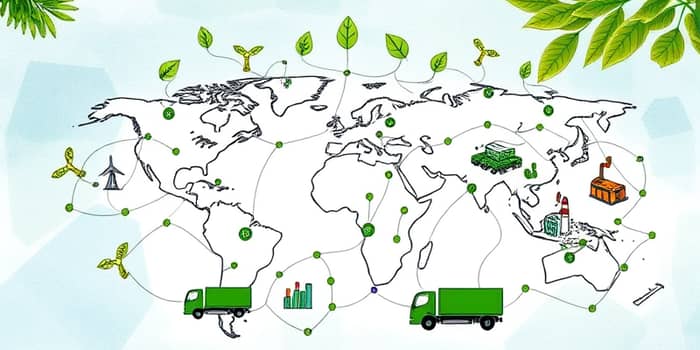
In a rapidly shifting global economy, companies must reimagine how they source, produce, and deliver goods. Traditional supply chains, optimized solely for speed and cost, now face unprecedented threats from climate events, geopolitical tensions, and evolving regulations.
Adopting sustainable practices not only safeguards operations against disruption but also unlocks significant financial and reputational benefits. By integrating environmental stewardship, ethical labor standards, and social responsibility at every stage, organizations can build long-term resilience and competitive advantage.
Sustainable supply chains integrate ethical, environmental, and social practices at every node, extending beyond mere compliance. This approach optimizes resource use, reduces waste, and extends the lifecycles of products and materials.
By embedding renewable resources, circular economy principles, and transparent partnerships, businesses transform linear processes into regenerative systems. The result is a network that delivers value without compromising the needs of future generations.
Recent disruptions—from pandemic lockdowns to extreme weather—have exposed the fragility of conventional supply chains. Organizations that pivot to sustainability gain multiple advantages:
Modern enterprises pursue two intertwined objectives: shielding operations from unforeseen crises and enhancing profitability through efficiency and innovation. A clear view of both dimensions aids strategic decision-making.
Implementing sustainable, risk-resilient practices requires a holistic approach spanning procurement, operations, and logistics.
Transitioning to sustainable supply chains entails upfront investments in technology, process redesign, and staff training. While initial costs can appear daunting, they typically pay for themselves through lower operating expenses and avoided disruption losses.
Achieving full transparency across multi-tier supplier networks is often complex. It demands robust data platforms and strong collaboration. Equally critical is fostering a culture shift—moving from purely efficiency-driven to purpose-driven workflows, supported by executive leadership and clear incentives.
Advanced technologies are catalysts for sustainable transformation:
Blockchain provides immutable traceability, authenticating ethical sourcing and compliance. IoT sensors monitor shipment conditions in real time, preventing spoilage and waste. Artificial intelligence forecasts demand, optimizes routing, and identifies hidden risks, while integrated ERP and ESG governance platforms track emissions, energy, and waste across the entire supply network.
These tools offer organizations unprecedented visibility and control, empowering proactive risk management and continuous improvement.
Clear metrics ensure that sustainability goals remain front and center:
Regular reporting aligned with globally recognized frameworks builds stakeholder trust and drives ongoing performance gains.
Nike, after facing criticism for environmental impacts, revamped its supplier code of conduct and prioritized renewable materials. This shift not only reduced deforestation risks but also strengthened consumer trust and sales.
Logistics leader DHL implemented a comprehensive supplier diversification program, boosting delivery reliability by 20% and mitigating ESG risks. Industry-wide initiatives aim to increase supplier counts by 75% by 2025, demonstrating the power of collective action.
Looking ahead, organizations can expect intensified regulatory pressures and growing demands for transparency. The digital transformation of supply chains will accelerate, with AI, IoT, and blockchain forming the backbone of agile, low-impact networks. Circular economy models will evolve, driving product designs that prioritize reuse, remanufacturing, and end-of-life recovery.
Leaders should invest in cross-functional teams, foster partnerships with local stakeholders, and champion continuous innovation. By doing so, they will not only minimize risk but also unlock new avenues for growth and differentiation.
Sustainable supply chains are no longer a niche priority—they are fundamental to resilience, profitability, and corporate purpose. Organizations that embrace ethical sourcing, technology-enabled transparency, and circular design principles position themselves to thrive amid uncertainty.
By minimizing risk and maximizing return through sustainable practices, businesses can safeguard their operations, delight stakeholders, and contribute to a healthier planet for future generations.
References