In an era of accelerating climate impacts and rapid urban growth, cities must become more than just efficient—they must become resilient. Urban resilience encompasses the capacity of physical, social, economic, and institutional systems to withstand, recover from, and adapt to both chronic stresses and acute shocks. By aligning smart technology with green infrastructure, municipalities can protect vulnerable populations, optimize resources, and foster sustainable growth for decades to come.
Urban resilience is the measurable ability of a city’s systems and inhabitants to maintain continuity through all shocks and stresses, while positively adapting toward sustainability. According to UN-Habitat, this involves more than emergency response—it requires proactive transformation. The Resilient Cities Network emphasizes a holistic approach, engaging the most vulnerable groups to ensure no one is left behind.
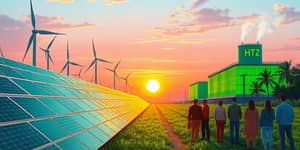
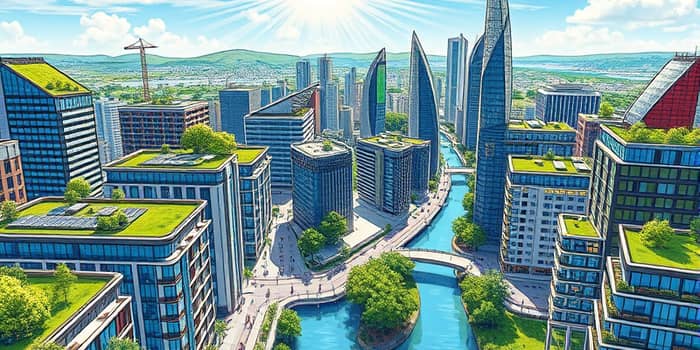
Smart city development refers to integrating digital technologies—sensors, data analytics, automation—for more efficient urban management. Green city development prioritizes natural systems and sustainability practices, such as green roofs, blue infrastructure for water management, and renewable energy adoption. Together, these approaches create integrated risk management and adaptation measures that safeguard communities and ecosystems.
Three major trends underscore the urgency of resilience planning. First, climate change is intensifying heatwaves, storms, floods, and sea-level rise, especially in coastal and low-lying urban areas. Second, urbanization continues unabated—over half of the world’s population now lives in cities, a figure projected to reach 68% by 2050. Third, globalization ties economies closer together, allowing shocks in one region to cascade worldwide.
As these forces converge, city leaders must anticipate impacts, build adaptive capacity, and leverage both local knowledge and global best practices.
Effective resilience strategies rest on five pillars. First, integrated planning links infrastructure, housing, transportation, and social services. Second, risk assessment and management involves systematic hazard mapping, vulnerability analysis, and adaptation measures. Third, infrastructure resilience combines hard (physical) and soft (social) systems to absorb shocks. Fourth, community engagement fosters social capital—strong neighborhood ties that reduce losses during disasters. Finally, smart technology integration provides real-time data, communication platforms, and early warning systems for rapid response.
Together, these pillars create a sturdy foundation for adaptive cities that learn and evolve.
The City Resilience Index (CRI), developed by Arup and the Rockefeller Foundation, benchmarks urban resilience across 12 universal factors in four core dimensions using 58 indicators and 156 assessment questions. Many cities now appoint a Chief Resilience Officer (CRO) to coordinate cross-departmental efforts and stakeholder engagement. Assessment instruments blend quantitative data—climate models, hazard maps—with qualitative insights gathered through participatory workshops.
By regularly evaluating progress and incorporating feedback, cities can refine strategies, close gaps, and build trust between government agencies and citizens.
Smart and green investments offer layered protection and co-benefits. Green infrastructure—urban parks, green roofs, wetlands, bioswales—mitigates flood risk, reduces urban heat, and enhances biodiversity. Blue infrastructure, like China’s “sponge cities,” uses vegetation and engineered wetlands to absorb floodwaters. Hybrid solutions combine traditional grey infrastructure with nature-based elements for robust, adaptable systems.
By deploying real-time data, digital platforms, and predictive analytics, cities optimize resource use and respond swiftly to emerging threats.
Social capital plays a crucial role in disaster response. Research after the 2011 Japan tsunami revealed that communities with strong neighborhood ties and social capital experienced up to 50% lower mortality rates than those relying solely on structural defenses. Inclusive public spaces and participatory processes strengthen local networks and collective resilience.
Economic analyses by the World Bank and UN estimate that every $1 invested in resilient infrastructure can yield $4–7 in avoided losses through reduced repair costs and business interruptions. Beyond savings, resilience projects deliver co-benefits: improved air quality, enhanced urban biodiversity, and better mental and physical health for residents.
Despite the clear advantages, many cities still overinvest in rigid grey infrastructure at the expense of integrated, flexible solutions. Institutional fragmentation, limited community engagement, inconsistent planning frameworks, and insufficient data interoperability pose significant obstacles. To succeed, resilience-building must be iterative: plans should be evaluated, adapted, and enhanced as new risks emerge.
Equity and justice must guide every step. Ensuring investments reach underserved neighborhoods requires participatory planning and citizen platforms, transparent governance, and targeted funding mechanisms that prioritize the most vulnerable.
Rotterdam, Netherlands, leads in water management adaptation with innovative water plazas that double as public recreation spaces and flood retention basins. Residents helped co-design waterfront promenades, fostering strong community ownership.
Singapore seamlessly integrates green corridors, rainwater harvesting, and smart transit systems into its urban fabric, achieving high livability and environmental performance scores. The city-state’s data-driven central operations center oversees real-time monitoring of air quality, traffic, and water levels.
In New York City, the “Big U” project encircles Lower Manhattan with a protective green belt of berms, parks, and floodwalls, addressing storm surge while creating inviting waterfront spaces. Portland, Oregon, empowers neighborhoods through ‘resilience hubs’—local centers equipped for emergencies and everyday community-building.
Investing in smart, green city development is not just a technical challenge—it is a moral imperative. By uniting technology, nature-based solutions, and inclusive governance, cities can build holistic, sustainable urban ecosystems that protect lives, livelihoods, and the environment. Public-Private Partnerships, green bonds, and climate resilience funds offer diverse financing models to scale these initiatives.
Ultimately, resilience requires continuous learning, adaptation, and collaboration. Through cross-city networks and community-driven innovation, urban centers worldwide can transform uncertainty into opportunity, ensuring a prosperous, equitable future for all residents.
References